Yiddish Philharmonic Chorus Milestones
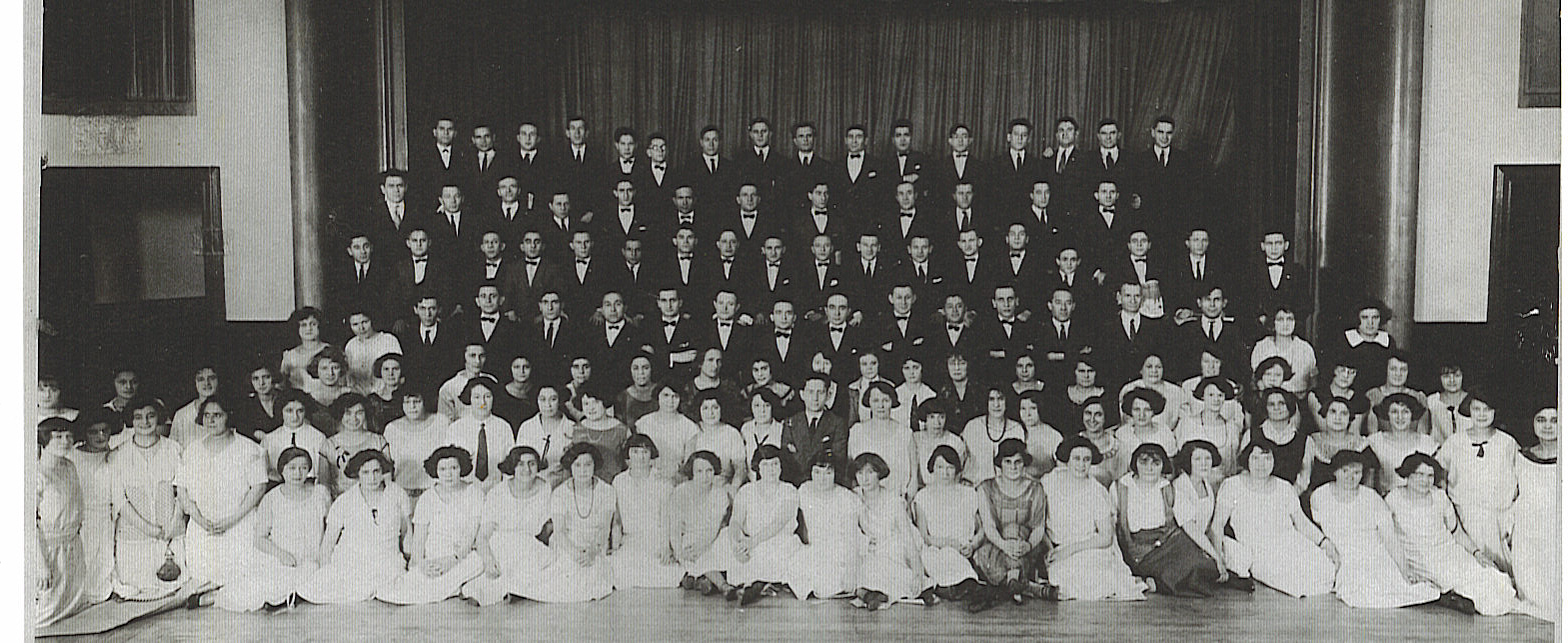
The Freiheit Gezang Farein, 1923
1923. The Freiheit Gezang Farein (FGF) was founded by conductor/composer Lazar Weiner on New York’s Lower East Side.
1924. FGF gave its first concert on February 23 in Carnegie Hall, New York City.
1925. The Jewish Workers Music Alliance (Der yidish-muzikalisher arbeter-farband) was founded as a funding organization for Yiddish choruses.
1926. FGF, conducted by Weiner, debuted Jacob Schaefer’s oratorio Tsvey Brider on February 20 in Mecca Temple, New York City – the first Yiddish chorus concert with an orchestra.
1926–36. Jacob Schaefer conducted the FGF, at times a 300-singer chorus.
1920s. International Workers Order members formed a total of 30 choruses (“ordn-khorn”) throughout New York and other U.S. cities.
1932. Jacob Schaefer compiled and was the musical arranger for “Mit gezang tsum kamf - Songs for Voice and Piano,” first in a series initially published by the International Workers Order.
1934. Jacob Schaefer compiled and edited “Gezang un kamf,” second in the series, with a new name and published by Der yidisher muzikalisher arbeter-farband.
1935–40. Jacob Schaefer and Max Helfman compiled and edited “Gezang un kamf,” issues 3 through 8, with one published each year – Schaefer edited through 1936; Helfman from 1938 through 1940; and a collaboration between them for the 1937 issue.
1936. Jacob Schaefer passed away suddenly at age forty-eight.
1936–48. Max Helfman conducted FGF.
1937. The Jewish Workers Music Alliance changed its name to the Jewish Music Alliance (Der yidisher muzik-farband).
1938. Freiheit newspaper editor Moyshe Olgin, a force in the creation and continuation of the FGF, passed away.
1948. FGF changed its name to the Jewish People’s Philharmonic Chorus (JPPC).
1948. JPPC performed its final concert conducted by Max Helfman on June 13 at Carnegie Hall, New York City.
1948–52. Dr. Leon Kopf, a German refugee, conducted JPPC and created the Chorus’s first recording.
1952–60. Eugene (Yehuda) Malek conducted JPPC.
1953. The first annual concert of the Jewish Cultural Clubs and Societies featured the sister chorus of the JPPC, the Jewish People’s Chorus of New York (JPCNY), conducted by Maurice Rauch.
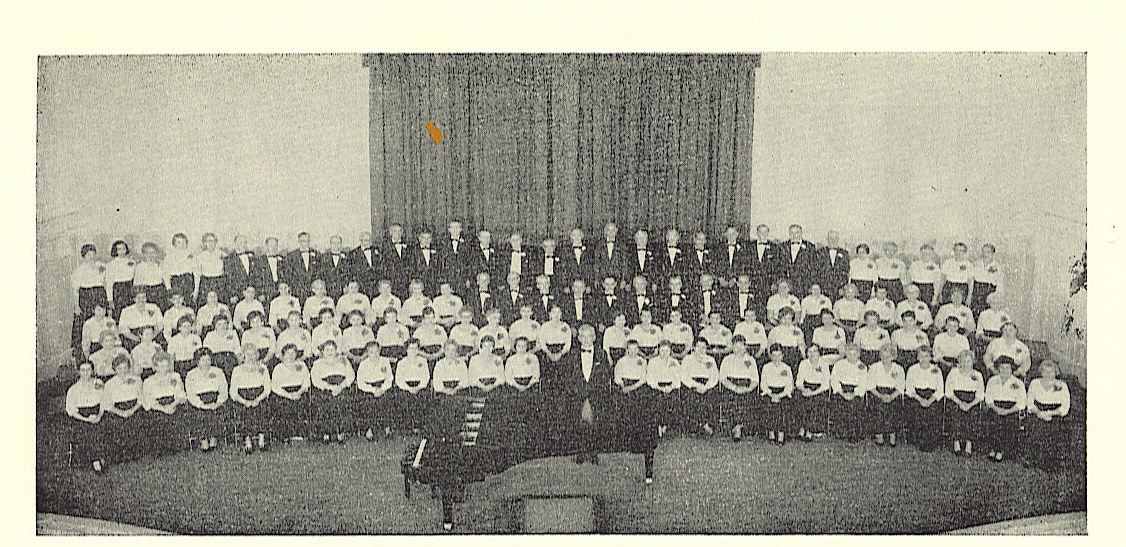
The Jewish People's Philharmonic Chorus (JPPC), 1964
1958–59. JPCNY made two recordings – A Goldfaden Collection, and Sholem Aleichem Dir, Amerike!, a folk-operetta adapted from Sholom Aleichem stories (libretto by Martin Birnbaum, music by Maurice Rauch).
1960–71. JPCNY merged with JPPC. Maurice Rauch conducted the combined group, called JPPC.
1960–2021. The chorus retains the name JPPC.
1967. Recorded Schaefer’s Tsvey Brider.
1971–72. Oscar Julius conducted.
1972–78. Maurice Rauch returned to conduct.
1978–80. Franco Rossi conducted.
1980. Rauch conducted one concert.
1980–84. Madeline Simon conducted – its first female conductor.
1984–95. Peter Schlosser conducted.
1985. The Jewish Music Alliance merged with the Zhitlowsky Foundation.
1995. Di Goldene Keyt (The Golden Chain), Ltd. was founded as a nonprofit to support the creation and high-quality performance of Yiddish choral music.
1995. Binyumen Schaechter began conducting JPPC.
1998. Began year-round Outreach Concerts throughout the New York tri-state area, from Town Hall to the Museum of Jewish Heritage.
2000. First appeared as a featured chorus at the annual North American Jewish Choral Festival.
2000. Performed at World Trade Center Plaza in New York City – the only Yiddish chorus ever to appear there.
2001. Sang for a Chanukah memorial ceremony at the site of the World Trade Center terrorist attacks.
2001. Held auditions for the first time in the Chorus’s history.
2002. Performed at Queens College (NY).
2002, 2005, 2006. Performed at the New York International Choral Festival at Alice Tully Hall (NY) – the only Jewish chorus ever represented.
2003. After 80 years, became the world’s longest-functioning Jewish chorus.
2004. Performed at Gratz College (PA), Congregation Kehilath Jeshurun (NY), Riverdale Jewish Center (NY).
2005. Performed at Shea Stadium (NY, now Citi Field) for the NY Mets’ Jewish Heritage Day – the only Yiddish chorus ever to appear there.
2006. Released a CD, Zingt! A Celebration of Yiddish Choral Music – its first recording in 39 years.
2007. Recorded its first live-in-concert DVD, released in 2009.
2007. Was filmed and recorded for the 2009 feature film Tickling Leo.
2008. Performed at West Point Military Academy (NY) – the first Yiddish chorus ever to appear there.
2008. Performed its annual gala spring concert at Symphony Space (NY) for the first time.
2010. Performed at Riverside Church (NY) – the only Jewish chorus in the 5th New York International Choral Festival.
2011. Gave its first performance with the ensemble standing “mixed” (not in voice sections), the first Yiddish chorus to do so.
2013. Performed at the Cathedral of St. John the Divine (NY), the fourth-largest church in the world, commemorating 70 years since the Warsaw Ghetto Uprising.
2014. Posted its first videos on YouTube.
2016. Performed its annual gala spring concert at Merkin Hall (NY) for the first time.
2016. Began making video recordings of each rehearsal, so that any singer who needed. to be absent would rehearse on their own with the recording before the Chorus next met, the first Yiddish chorus to do so.
2018. Performed its first concerts with English supertitles throughout.
2020–2021. No rehearsals or performances between March 2020 and August 2021 due to the COVID-19 pandemic.
2021. JPPC changed its name to The Yiddish Philharmonic Chorus (TYPC).
2021–. The chorus retains the name TYPC .
2021. Recorded and posted on YouTube its first virtual choir recording.
2022. Performed its first post-pandemic concerts, celebrating its 100th season.
CONCERT THEMES
2014. Amerike di prekhtike (America the Beautiful) – celebrating 360 years since the first Jews arrived in North America
2015. From Paris to Peretz: A Musical Tour
2016. To Life, To Laugh, Lekhayim – celebrating Sholem Aleichem on the centennial of his death
2017. Yiddish and British on Broadway
2018. To Everything There Is a Season – the Jewish calendar in music
2019. Yiddish Flavors of Love
2022. From Babies to Bubbies: A Lifetime in Yiddish Song
2023. Chutzpah! Yiddish Songs of Defiance
2024. From Varshe and Vilne to Vashington Heights – on Jewish immigration
2025. FROYEN! Women in Yiddish Song
2026. With Poetry and Justice for All: Three Anniversaries in Yiddish Song